
Private concierge medicine is a direct-pay healthcare model where patients pay a membership fee for personalized physician access, longer appointments, and a significantly reduced patient panel. The industry term is “concierge medicine,” though you may also encounter it called retainer medicine or boutique primary care. Understanding what is private concierge medicine explained requires looking at how it differs structurally from traditional insurance-based primary care, where physicians routinely manage 2,000–3,000 patients. Concierge physicians limit their panels to 200–600 patients, which creates the conditions for a fundamentally different care experience. This guide covers how the model works, what it costs, and what to consider before choosing it.
What is private concierge medicine, and how does it work?
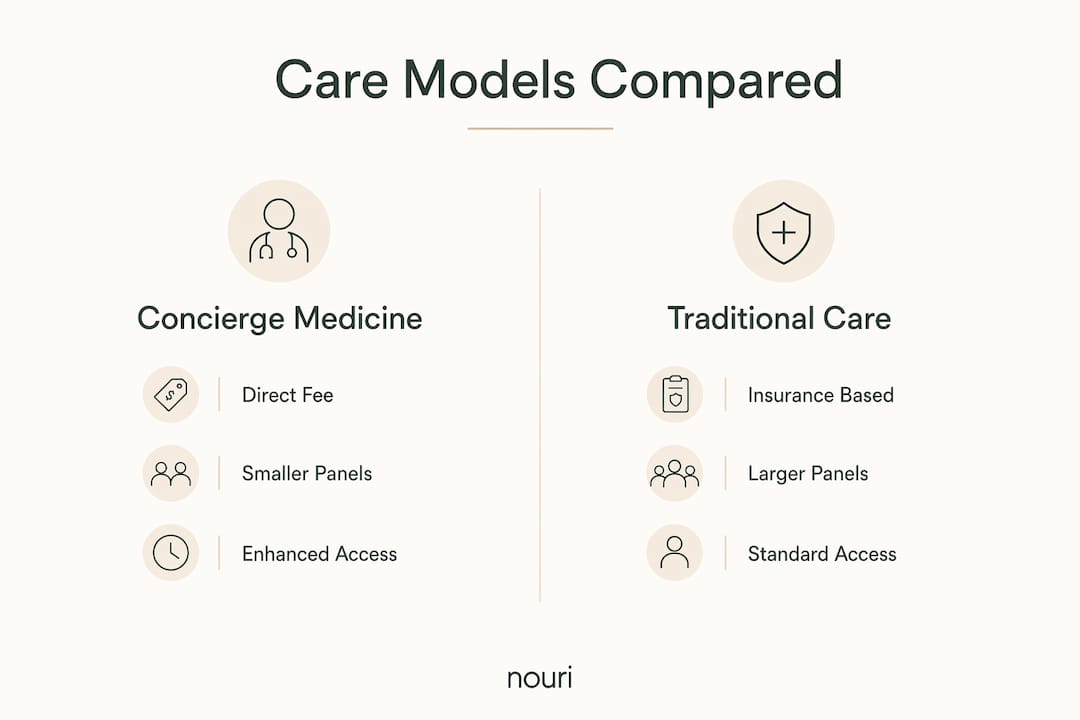
Private concierge medicine is defined by three structural features: a direct membership fee paid by the patient, a sharply reduced patient panel, and enhanced access to a named physician. Patients pay the fee regardless of how often they visit. In return, they receive a level of access and attention that the standard insurance-based system rarely delivers.
The membership fee covers the physician relationship itself. It does not cover hospitalizations, surgeries, or most prescription medications. Patients must maintain traditional insurance alongside their concierge membership to cover those costs. This is one of the most commonly misunderstood aspects of the model.
Price transparency is a defining feature of concierge medicine. Patients know exactly what they pay and what they receive, which contrasts sharply with the opaque billing structures of traditional insurance-based care. That clarity alone is a meaningful shift for patients who have spent years navigating explanation-of-benefits statements.

What services and benefits does private concierge medicine offer?
The core benefit of concierge medicine is time. Visits in traditional primary care settings typically last 10–15 minutes. Concierge practices offer appointments up to 60 minutes, giving physicians the space to address multiple concerns, review history thoroughly, and discuss prevention without rushing.
Beyond visit length, concierge medicine delivers a distinct set of services that standard primary care rarely includes:
- Same-day or next-day appointments for acute concerns, without waiting weeks for availability
- Direct physician access via phone, text, or email, 24/7 without intermediaries
- Comprehensive annual physicals with expanded diagnostics beyond what insurance typically authorizes
- Personalized preventive and lifestyle counseling tailored to individual health goals
- Care coordination for specialist referrals, hospital admissions, travel medicine, and urgent care
- House calls and enhanced wellness planning that insurance models rarely cover
The combination of direct access and reduced panel size means your physician actually knows your history. You are not re-explaining your situation to a different provider at each visit.
Pro Tip: Ask any concierge practice for a written list of included services before signing. Practices vary significantly in what the membership covers, and verbal descriptions can be misleading.
For patients who value private healthcare access, the ability to reach a physician directly without navigating a call center is often the single most valued feature of the model.
How do fees and patient panel sizes compare to traditional primary care?
Concierge medicine fees vary widely. Traditional concierge memberships typically range from $2,500 to $25,000 per year. Direct Primary Care (DPC), a lower-cost subset of the broader model, charges $75 to $200 per month. That fee range reflects real differences in services, physician availability, and practice size.
The table below summarizes the key structural differences in patient load and cost between the two models.
| Feature | Concierge medicine | Traditional primary care |
|---|---|---|
| Annual patient panel size | 200–600 patients | 2,000–3,000 patients |
| Typical annual fee | $2,500–$25,000 | No direct fee (insurance billed) |
| Average visit length | Up to 60 minutes | 10–15 minutes |
| Same-day appointment access | Standard | Rarely available |
| Direct physician contact | Yes, 24/7 | No |
The panel size difference is the most consequential number in this table. A physician managing 600 patients has roughly five times more capacity per patient than one managing 3,000. That ratio determines how much time, attention, and continuity each patient actually receives.
“Concierge medicine’s smaller panel sizes enable longer, unhurried visits lasting up to 60 minutes, contrasting significantly with standard 10-15 minute visits in traditional settings.”
The value proposition behind higher fees is straightforward. Patients pay for access, time, and a physician who is not administratively overwhelmed. Whether that value justifies the cost depends on individual health needs, income, and how much the current system has failed to meet expectations.
What are the key differences between concierge medicine and direct primary care?
Concierge medicine and Direct Primary Care are related models, but they are not the same. Understanding the distinction matters before committing to either.
Traditional concierge medicine charges an annual retainer fee and continues to bill insurance for covered services. The membership covers enhanced access and services beyond what insurance pays for. DPC, by contrast, does not bill insurance for any visits. The monthly fee covers all primary care services directly, and patients are advised to carry a separate high-deductible insurance plan for specialist and hospital coverage.
There is also a regulatory distinction. DPC arrangements are explicitly excluded from insurance classification under the Affordable Care Act when structured properly. This affects how practices operate, how they bill, and what compliance obligations they carry.
The practical impact for patients looks like this:
| Factor | Traditional concierge | Direct primary care |
|---|---|---|
| Fee structure | Annual retainer | Monthly flat fee |
| Insurance billing | Yes, for covered services | No insurance billing |
| Typical monthly cost | $200–$2,000+ | $75–$200 |
| Separate insurance needed | Yes | Yes (high-deductible plan advised) |
| Panel size | 200–600 | Often under 600 |
Pro Tip: If cost is a primary concern, DPC practices offer many of the same access benefits as traditional concierge medicine at a fraction of the annual cost. The trade-off is that some premium services, such as house calls or travel medicine, may not be included.
Patients exploring personalized physician support should evaluate both models against their specific health needs and insurance situation before deciding.
How does concierge medicine affect the patient-physician relationship and outcomes?
Physician burnout is a documented driver of the concierge medicine movement. Smaller panel sizes reduce burnout and correlate with fewer medical errors and better patient outcomes. A physician who is not managing 2,500 patients has the cognitive bandwidth to think carefully about each one.
The shift from transactional to relationship-based care is the clinical argument for concierge medicine. In a traditional practice, visits are often problem-focused and brief. In a concierge setting, the physician tracks patterns over time, notices changes before they become crises, and invests in prevention rather than reaction.
Patients report several consistent benefits from this model:
- Greater continuity with a single physician who knows their full history
- Faster response to concerns before they escalate
- Reduced reliance on emergency rooms for issues that could be handled by a primary care physician
- Increased comfort discussing sensitive health topics due to established trust
- Better coordination when specialist care is needed
“Patients benefit from a shift from transactional to relationship-based care, creating trust and convenience via direct 24/7 contact and quick appointment access.”
Dedicated care teams consistently show that continuity of care improves outcomes across chronic disease management, preventive screening adherence, and patient satisfaction. Concierge medicine builds that continuity into its structure by design.
The model is also a market-driven response to the administrative burden that has made traditional primary care increasingly unsatisfying for physicians. When physicians spend less time on paperwork and more time on patients, the quality of clinical thinking improves. That benefits patients directly.
Key takeaways
Private concierge medicine delivers meaningfully better access and continuity by limiting patient panels to 200–600 people, but patients must maintain traditional insurance to cover hospital and specialist costs outside the membership.
| Point | Details |
|---|---|
| Panel size is the core difference | Concierge physicians manage 200–600 patients versus 2,000–3,000 in traditional practices. |
| Fees vary significantly by model | Traditional concierge costs $2,500–$25,000 per year; DPC charges $75–$200 per month. |
| Insurance is still required | Membership fees cover the physician relationship, not hospitalizations or specialist care. |
| DPC and concierge are distinct | DPC does not bill insurance; traditional concierge does, while charging an additional retainer. |
| Outcomes improve with continuity | Smaller panels reduce physician burnout and support better preventive care and fewer errors. |
Why concierge medicine deserves a more honest conversation
Most articles on concierge medicine treat it as either a luxury indulgence or a solution to everything wrong with American healthcare. Neither framing is accurate.
What makes the model genuinely compelling is the structural logic. When a physician manages 600 patients instead of 2,500, the math of attention changes. That is not marketing. It is arithmetic. The question worth asking is not whether concierge medicine is better in theory, but whether the specific practice you are considering actually delivers on that promise.
The cost objection is real and should not be dismissed. A $10,000 annual retainer is not accessible to most Americans, and the DPC model, while more affordable, still requires patients to carry separate insurance. Anyone evaluating this option needs to do the full cost accounting, including what they currently spend on insurance premiums, copays, and out-of-network fees.
One caution worth raising is the assumption that a higher fee automatically means better care. The quality of a concierge practice depends entirely on the physician. A smaller panel with a disengaged doctor is not better than a busy practice with an attentive one. Vet the physician as carefully as you evaluate the fee structure.
The broader healthcare system implication is worth acknowledging. When experienced physicians move into concierge practices, they exit the traditional system. That concentrates access among those who can afford it. That is a legitimate policy concern, even for patients who benefit from the model personally.
For individuals managing complex, chronic, or weight-related health conditions, the concierge model’s emphasis on prevention, continuity, and direct access aligns closely with what the evidence shows produces better long-term outcomes.
Physician-guided care that reflects concierge values
For patients who want the attention and continuity that concierge medicine promises, but through a model built around a specific clinical need, Nouri offers a physician-guided weight care program structured around those same principles.
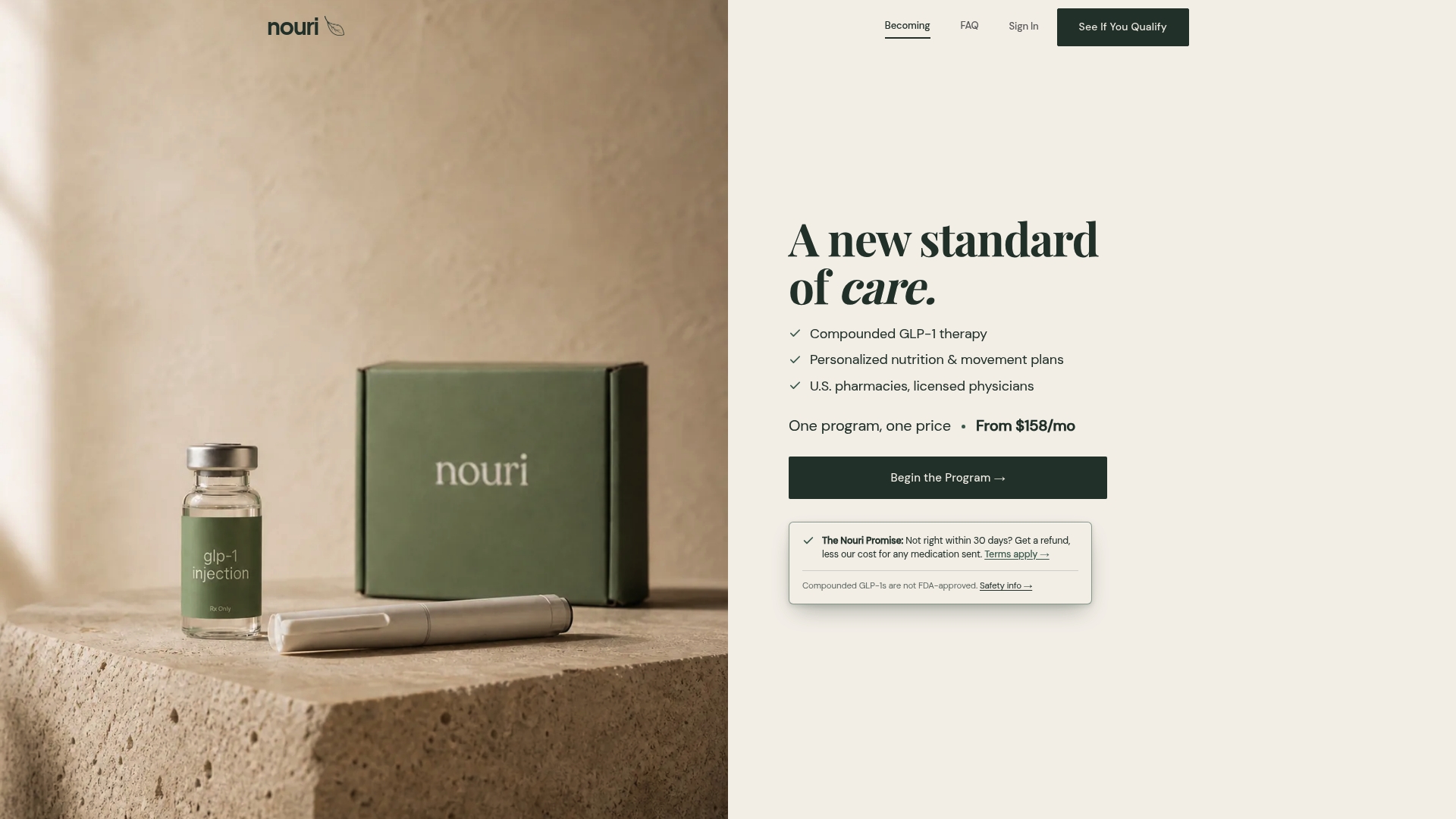
Nouri’s U.S.-licensed physicians review each patient’s clinical situation individually. Eligible patients receive weekly doses of semaglutide or tirzepatide, prepared by state-licensed 503A compounding pharmacies, alongside personalized nutrition and movement plans. The program includes ongoing clinical support with the Nouri Care Team, with an emphasis on privacy, discretion, and direct communication. Prescription medication is prescribed only if clinically appropriate following a thorough review. To learn more about Nouri’s personalized plans and whether you may be eligible, visit the program page.
FAQ
What is concierge medicine in simple terms?
Concierge medicine is a healthcare model where patients pay a direct membership fee for enhanced access to a physician who manages a much smaller patient panel than in traditional primary care.
Does a concierge membership replace health insurance?
No. Membership fees cover the physician relationship and primary care services, but patients must maintain separate insurance for hospitalizations, surgeries, and specialist care.
How much does concierge medicine typically cost?
Traditional concierge memberships range from $2,500 to $25,000 per year. Direct Primary Care, a related model, charges $75 to $200 per month with no insurance billing.
What is the difference between concierge medicine and direct primary care?
Traditional concierge medicine charges an annual retainer and still bills insurance for covered services. DPC charges a flat monthly fee and does not bill insurance for any visits.
Is concierge medicine worth it for preventive care?
For patients prioritizing prevention, the model’s longer visits, direct physician access, and reduced panel sizes create conditions that support more thorough and proactive care than standard primary care typically allows.
Recommended
Medical Disclaimer: This article is for informational purposes only and does not constitute medical advice. Always consult with a qualified healthcare provider before starting or changing any medication or treatment. Licensed providers review patient assessments before making clinical decisions.
Begin your wellness journey today
Personalized wellness plans from licensed providers. Free shipping. 100% online.
See If You Qualify