A licensed clinician you can verify
Prescriptions come from clinicians licensed in your state — credentials you can check against your state medical board.
Semaglutide providers aren’t hard to find — a verifiable one is. The difference comes down to what a provider will show you: a U.S.-licensed clinician who actually reviews your health, a named, state-licensed pharmacy, and a price you can see in full. Here are four checks to run before you pay.
Nouri is an independent editorial site. It doesn’t prescribe or sell medication.
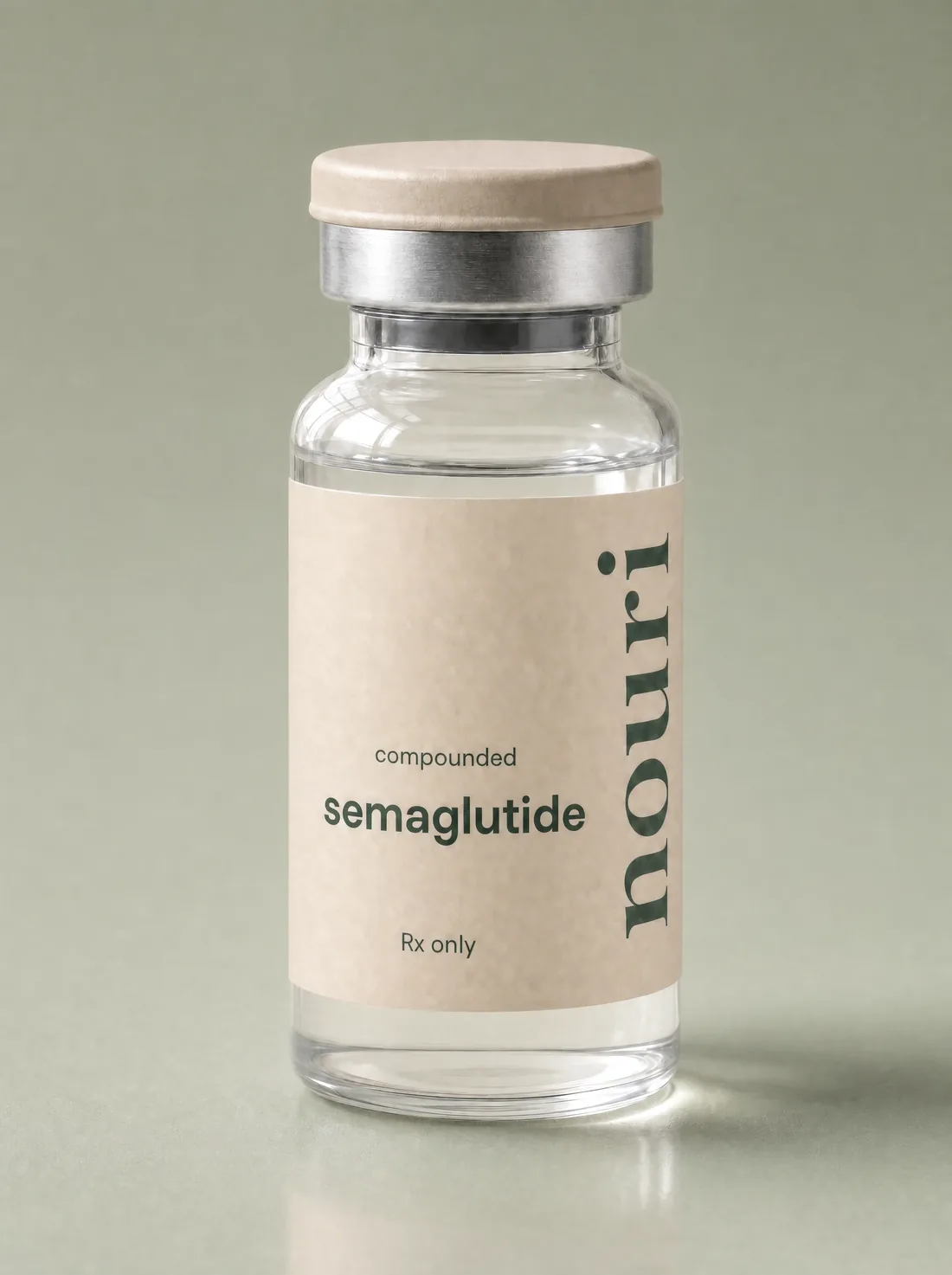
A semaglutide provider is a U.S.-licensed clinician with prescriptive authority — a physician, or in many states a nurse practitioner or physician assistant — licensed in the state where you live. Semaglutide is prescription-only, so any seller offering it without a prescription or medical review is not operating legitimately. A provider worth trusting shows its work: a real health intake, licensed clinicians, and the name of the state-licensed pharmacy that prepares the medication. If that medication is compounded semaglutide, it is not FDA-approved and is not therapeutically equivalent to Wegovy or Ozempic.
In clinical trials, semaglutide reduced daily calorie intake by about 24% versus placebo, with participants reporting less hunger, fewer food cravings, and better control of their eating.1
Each check below is something you can verify yourself before you hand over a card number.
Prescriptions come from clinicians licensed in your state — credentials you can check against your state medical board.
Ask which state-licensed 503A pharmacy compounds the medication, then look it up with your state board of pharmacy. Many providers won’t tell you where the medication comes from. Ask anyway.
Your health history gets reviewed before anything is prescribed, and not everyone qualifies — that’s what the review is for.
Dose changes, side-effect questions, follow-ups — a provider should still be there in week six. Ask whether clinician messaging is in the price or billed per visit.
Compounded semaglutide is not FDA-approved. Important Safety Information → What compounding means →
Medication works best with structure around it. Some providers include nutrition guidance, a movement plan and clinician messaging in the monthly price; others sell the medication alone and charge for the rest. Ask what the price covers, and whether it rises with the dose, before you compare one provider with another.

average body-weight reduction in clinical trials of GLP-1 medication — achieved alongside a structured nutrition and movement plan.
Compounded semaglutide is not FDA-approved; the FDA does not verify the safety, effectiveness, or quality of compounded drugs. The figures above are averages from clinical trials of GLP-1 medications. Individual results vary and are not typical. Important Safety Information →
Nouri doesn’t sell semaglutide, so there’s no Nouri price to quote here. Provider prices differ on three things: how long a plan you commit to, whether a membership or visit fee sits on top, and whether the price climbs as the dose goes up. Ask each provider for the monthly total in writing.
Compounded semaglutide is not FDA-approved. A provider’s own site has the current price.
Before you pick a semaglutide provider
A U.S.-licensed clinician with prescriptive authority — a physician, and in many states a nurse practitioner or physician assistant — licensed in the state where you live.
Many don’t. Most compounded semaglutide providers are cash-pay, so there is no insurance or prior authorization, though prices, fees and whether the price rises with dose vary by provider. Nouri is not a provider.
Ask the provider before you pay, then check the pharmacy’s license with your state board of pharmacy. Nouri does not prescribe, so it has no pharmacy of its own. Ask any provider you consider which state-licensed pharmacy fills its prescriptions - a provider that won’t name its pharmacy is asking you to take its supply chain on faith.
It varies by provider, plan length and, at some providers, dose. Nouri does not sell semaglutide, so there is no Nouri price. Published prices from licensed providers vary and change often; our comparison lists each company’s own published price. To find a licensed provider, start by comparing licensed providers; a clinician makes the final call, and not everyone qualifies.
Doing your homework? Good. Read is it safe to buy semaglutide online, or see what semaglutide costs in 2026.
Nouri is an independent publisher, not a semaglutide provider: it doesn’t prescribe, dispense or sell medication, and this page isn’t medical advice. Compounded semaglutide is not FDA-approved. If you choose a provider through one of our links, Nouri may earn a fee if you join. How Nouri makes money → Important Safety Information →
Compare licensed options
Both require a prescription from a licensed clinician.
nouri may earn a commission on some of these links as an affiliate. Order is not a ranking. Published cash rates, checked Sept 2026 — confirm on the provider’s site. Compounded drugs are not FDA-approved. Not affiliated with Eli Lilly and Company or Novo Nordisk; brand names identify products only.
Compare all licensed options →Important Safety Information →Full disclosure →