How many units is 5 mg of tirzepatide?
50 units (0.5 mL) from a 10 mg/mL vial, or 25 units from a 20 mg/mL vial, on a U-100 insulin syringe.
| mg/mL | 10 | 15 | 17 | 20 | 25 |
|---|---|---|---|---|---|
| Units | 50 | 33.3 | 29.4 | 25 | 20 |
| mL | 0.5 | 0.333 | 0.294 | 0.25 | 0.2 |
This tirzepatide dosage calculator converts the dose your clinician prescribed — in milligrams — into insulin-syringe units and milliliters, based on your vial’s concentration. Pick your dose, pick the concentration on your pharmacy label, and read the syringe.
Educational only. It converts a prescribed dose; it never chooses one. Always confirm against your pharmacy label.
This draw is more than 100 units (over 1 mL) — it won’t fit a standard 1 mL U-100 syringe. Confirm your concentration and syringe size with your pharmacy.
The same dose is a different number of units at every concentration. Verify the mg/mL on your vial’s label before drawing — never reuse a units number from a different vial, a friend, or a forum.
Price check: what tirzepatide costs across 14 options, ranked by monthly price.
To convert a tirzepatide dose from milligrams to insulin-syringe units, divide the dose (mg) by your vial’s concentration (mg/mL) to get milliliters, then multiply by 100 — because a U-100 insulin syringe holds 100 units per milliliter. Example: a 2.5 mg dose from a 10 mg/mL vial is 0.25 mL, which is 25 units. The same dose is a different unit count at every concentration, so always confirm the mg/mL printed on your pharmacy label. Compounded tirzepatide is dispensed this way in multi-dose vials; it is not FDA-approved and is not therapeutically equivalent to Zepbound or Mounjaro, which come in fixed-dose pens.
dose mg ÷ concentration mg/mL × 100 = units U-100
Every answer below is for a U-100 insulin syringe (100 units = 1 mL), the scale printed on a standard 100-unit syringe.
50 units (0.5 mL) from a 10 mg/mL vial, or 25 units from a 20 mg/mL vial, on a U-100 insulin syringe.
| mg/mL | 10 | 15 | 17 | 20 | 25 |
|---|---|---|---|---|---|
| Units | 50 | 33.3 | 29.4 | 25 | 20 |
| mL | 0.5 | 0.333 | 0.294 | 0.25 | 0.2 |
75 units (0.75 mL) from a 10 mg/mL vial, or 37.5 units from a 20 mg/mL vial, on a U-100 insulin syringe.
| mg/mL | 10 | 15 | 17 | 20 | 25 |
|---|---|---|---|---|---|
| Units | 75 | 50 | 44.1 | 37.5 | 30 |
| mL | 0.75 | 0.5 | 0.441 | 0.375 | 0.3 |
100 units (1 mL) from a 10 mg/mL vial, or 50 units from a 20 mg/mL vial, on a U-100 insulin syringe.
| mg/mL | 10 | 15 | 17 | 20 | 25 |
|---|---|---|---|---|---|
| Units | 100 | 66.7 | 58.8 | 50 | 40 |
| mL | 1 | 0.667 | 0.588 | 0.5 | 0.4 |
Converts a prescribed dose only; use the mg/mL on your vial label.
Want this calculator on your own site? Embed this calculator.
Every cell is (dose ÷ concentration) × 100, rounded to one decimal. Cells marked † exceed 100 units — more than a standard 1 mL U-100 syringe holds.
| Dose | 5 mg/mL | 10 mg/mL | 12.5 mg/mL | 15 mg/mL | 17 mg/mL | 20 mg/mL | 25 mg/mL |
|---|---|---|---|---|---|---|---|
| 2.5 mg | 50 0.5 mL | 25 0.25 mL | 20 0.2 mL | 16.7 0.167 mL | 14.7 0.147 mL | 12.5 0.125 mL | 10 0.1 mL |
| 5 mg | 100 1 mL | 50 0.5 mL | 40 0.4 mL | 33.3 0.333 mL | 29.4 0.294 mL | 25 0.25 mL | 20 0.2 mL |
| 7.5 mg | 150 † 1.5 mL | 75 0.75 mL | 60 0.6 mL | 50 0.5 mL | 44.1 0.441 mL | 37.5 0.375 mL | 30 0.3 mL |
| 10 mg | 200 † 2 mL | 100 1 mL | 80 0.8 mL | 66.7 0.667 mL | 58.8 0.588 mL | 50 0.5 mL | 40 0.4 mL |
| 12.5 mg | 250 † 2.5 mL | 125 † 1.25 mL | 100 1 mL | 83.3 0.833 mL | 73.5 0.735 mL | 62.5 0.625 mL | 50 0.5 mL |
| 15 mg | 300 † 3 mL | 150 † 1.5 mL | 120 † 1.2 mL | 100 1 mL | 88.2 0.882 mL | 75 0.75 mL | 60 0.6 mL |
† Exceeds a standard 1 mL U-100 syringe. Educational reference only — your prescriber sets your dose, and your pharmacy label is the source of truth for concentration. Compounded tirzepatide is not FDA-approved. Important Safety Information → What compounding means →
Reading a units number off your syringe and want the milligrams? Multiply the units by the vial’s concentration and divide by 100. On a U-100 syringe, 25 units is always 0.25 mL — that’s 2.5 mg from a 10 mg/mL vial and 5 mg from a 20 mg/mL vial.
| Syringe draw | 5 mg/mL | 10 mg/mL | 12.5 mg/mL | 15 mg/mL | 17 mg/mL | 20 mg/mL | 25 mg/mL |
|---|---|---|---|---|---|---|---|
| 10 units 0.1 mL | 0.5 mg | 1 mg | 1.25 mg | 1.5 mg | 1.7 mg | 2 mg | 2.5 mg |
| 20 units 0.2 mL | 1 mg | 2 mg | 2.5 mg | 3 mg | 3.4 mg | 4 mg | 5 mg |
| 25 units 0.25 mL | 1.25 mg | 2.5 mg | 3.125 mg | 3.75 mg | 4.25 mg | 5 mg | 6.25 mg |
| 30 units 0.3 mL | 1.5 mg | 3 mg | 3.75 mg | 4.5 mg | 5.1 mg | 6 mg | 7.5 mg |
| 40 units 0.4 mL | 2 mg | 4 mg | 5 mg | 6 mg | 6.8 mg | 8 mg | 10 mg |
| 50 units 0.5 mL | 2.5 mg | 5 mg | 6.25 mg | 7.5 mg | 8.5 mg | 10 mg | 12.5 mg |
| 60 units 0.6 mL | 3 mg | 6 mg | 7.5 mg | 9 mg | 10.2 mg | 12 mg | 15 mg |
| 75 units 0.75 mL | 3.75 mg | 7.5 mg | 9.375 mg | 11.25 mg | 12.75 mg | 15 mg | 18.75 mg |
| 100 units 1 mL | 5 mg | 10 mg | 12.5 mg | 15 mg | 17 mg | 20 mg | 25 mg |
1 mg from a 10 mg/mL vial, or 2 mg from a 20 mg/mL vial. On a U-100 insulin syringe, 10 units is always 0.1 mL.
| mg/mL | 10 | 15 | 17 | 20 | 25 |
|---|---|---|---|---|---|
| mg | 1 | 1.5 | 1.7 | 2 | 2.5 |
2 mg from a 10 mg/mL vial, or 4 mg from a 20 mg/mL vial. On a U-100 insulin syringe, 20 units is always 0.2 mL.
| mg/mL | 10 | 15 | 17 | 20 | 25 |
|---|---|---|---|---|---|
| mg | 2 | 3 | 3.4 | 4 | 5 |
2.5 mg from a 10 mg/mL vial, or 5 mg from a 20 mg/mL vial. On a U-100 insulin syringe, 25 units is always 0.25 mL.
| mg/mL | 10 | 15 | 17 | 20 | 25 |
|---|---|---|---|---|---|
| mg | 2.5 | 3.75 | 4.25 | 5 | 6.25 |
3 mg from a 10 mg/mL vial, or 6 mg from a 20 mg/mL vial. On a U-100 insulin syringe, 30 units is always 0.3 mL.
| mg/mL | 10 | 15 | 17 | 20 | 25 |
|---|---|---|---|---|---|
| mg | 3 | 4.5 | 5.1 | 6 | 7.5 |
4 mg from a 10 mg/mL vial, or 8 mg from a 20 mg/mL vial. On a U-100 insulin syringe, 40 units is always 0.4 mL.
| mg/mL | 10 | 15 | 17 | 20 | 25 |
|---|---|---|---|---|---|
| mg | 4 | 6 | 6.8 | 8 | 10 |
5 mg from a 10 mg/mL vial, or 10 mg from a 20 mg/mL vial. On a U-100 insulin syringe, 50 units is always 0.5 mL.
| mg/mL | 10 | 15 | 17 | 20 | 25 |
|---|---|---|---|---|---|
| mg | 5 | 7.5 | 8.5 | 10 | 12.5 |
6 mg from a 10 mg/mL vial, or 12 mg from a 20 mg/mL vial. On a U-100 insulin syringe, 60 units is always 0.6 mL.
| mg/mL | 10 | 15 | 17 | 20 | 25 |
|---|---|---|---|---|---|
| mg | 6 | 9 | 10.2 | 12 | 15 |
7.5 mg from a 10 mg/mL vial, or 15 mg from a 20 mg/mL vial. On a U-100 insulin syringe, 75 units is always 0.75 mL.
| mg/mL | 10 | 15 | 17 | 20 | 25 |
|---|---|---|---|---|---|
| mg | 7.5 | 11.25 | 12.75 | 15 | 18.75 |
10 mg from a 10 mg/mL vial, or 20 mg from a 20 mg/mL vial. On a U-100 insulin syringe, 100 units is always 1 mL.
| mg/mL | 10 | 15 | 17 | 20 | 25 |
|---|---|---|---|---|---|
| mg | 10 | 15 | 17 | 20 | 25 |
Reads a U-100 syringe marking back into milligrams; it does not suggest a dose. Use the mg/mL on your vial label.
Full titration ladder with units by vial strength: tirzepatide dosing chart.
A unit is one-hundredth of a milliliter — it says nothing about how much tirzepatide is in the liquid. Compounding pharmacies dispense vials at different strengths, commonly anywhere from 5 to 25 mg/mL, so the “right” number of units changes whenever the concentration does.
That’s the single most common source of confusion with compounded vials, and it’s why every conversion here starts from the mg/mL on your label. If your pharmacy changes concentrations between refills, your units number changes too — recheck it every time.
Strength isn’t the only thing that varies between pharmacies and providers; price does too. We track it in what compounded tirzepatide costs in 2026 and rank the cheapest GLP-1 programs by monthly price.
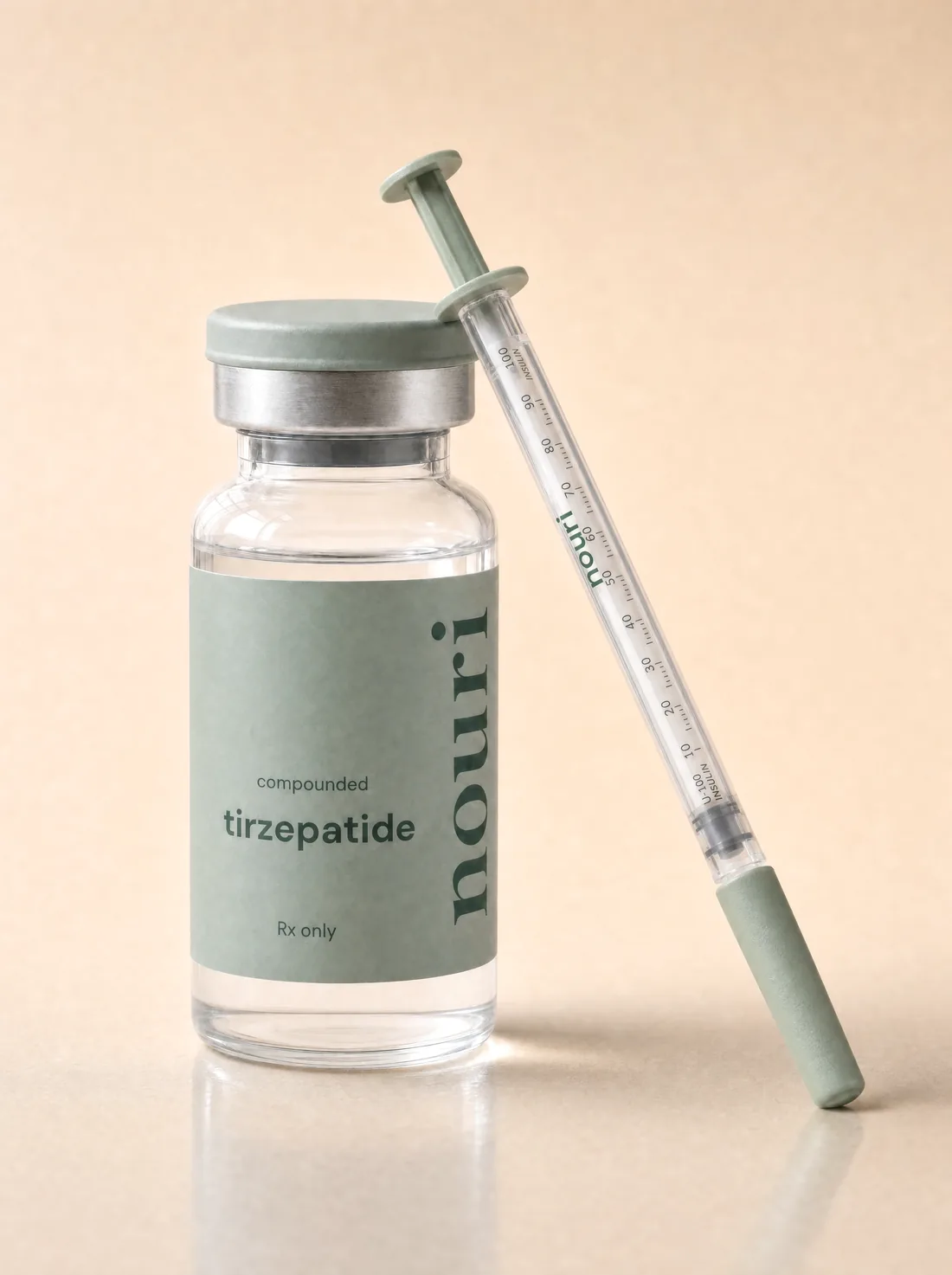
It depends entirely on your vial’s concentration. On a U-100 insulin syringe, 2.5 mg is 50 units from a 5 mg/mL vial, 25 units from a 10 mg/mL vial, 20 units from a 12.5 mg/mL vial, 14.7 units from a 17 mg/mL vial, 12.5 units from a 20 mg/mL vial, and 10 units from a 25 mg/mL vial. Check the concentration printed on your pharmacy label before drawing anything.
U-100 means the syringe scale is divided into 100 units per milliliter. That makes the conversion simple: milliliters × 100 = units. A 0.25 mL draw is 25 units; a 0.5 mL draw is 50 units.
Because your vials are different concentrations. Two people can both inject 5 mg of tirzepatide and draw completely different unit counts — 50 units from a 10 mg/mL vial versus 25 units from a 20 mg/mL vial. Units describe volume, not medication amount, which is why you should never copy someone else’s syringe markings.
No. Zepbound and Mounjaro are FDA-approved brand medications that come in fixed-dose pens. Compounded tirzepatide is prepared by state-licensed compounding pharmacies, usually as a multi-dose vial you draw with a syringe — it is not FDA-approved and is not therapeutically equivalent to the brand products.
Your prescriber. This calculator only converts a dose you were already prescribed into syringe units for your vial’s concentration — it does not suggest, adjust, or titrate doses. If you think your dose needs to change, that’s a conversation with your clinician, not a calculator.
Prescribed semaglutide? That molecule has its own tool — the semaglutide dosage calculator. Holding a vial of something else entirely? The mg to units calculator needs nothing but a concentration. Checking a titration ladder against your draw: tirzepatide dosing chart. Weighing up pharmacies and price: what tirzepatide costs in 2026. We also publish an Ivim Health review and a Henry Meds review.
Related tools & guides: all GLP-1 calculators · cheapest GLP-1 cost comparison · tirzepatide vs semaglutide · peptide reconstitution calculator
Provider reviews: Medvi reviews · TrimRx reviews · Hers reviews · LifeMD reviews · Hims weight loss reviews · Ro reviews · Remedy Meds reviews · SkinnyRx reviews · GobyMeds reviews · Shed reviews · Found weight loss reviews · all GLP-1 providers compared
Compare licensed options
Both require a prescription from a licensed clinician.
nouri may earn a commission on some of these links as an affiliate. Order is not a ranking. Published cash rates, checked Sept 2026 — confirm on the provider’s site. Compounded drugs are not FDA-approved. Not affiliated with Eli Lilly and Company or Novo Nordisk; brand names identify products only.
Compare all licensed options →Important Safety Information →Full disclosure →